

Impact of Wildfire Smoke on Air Intake Filters and Gas Turbine Performance
Forest and land fires are among the causes of declining air quality in various regions of Indonesia. Beyond their environmental and public health impacts, wildfire smoke can also affect industrial operations, particularly facilities that rely on gas turbines for mechanical power and electricity generation.
Wildfire smoke contains a mixture of fine particles, soot, ash, and other airborne contaminants that can travel long distances and reach industrial facilities. As particulate concentrations increase, gas turbine air intake filtration systems face a greater filtration load.
These conditions can accelerate contaminant accumulation on filter media, increase airflow resistance, and potentially affect the operating efficiency and reliability of gas turbines.
How Air Quality Affects Gas Turbine Air Intake Systems
Gas turbines require substantial volumes of air to support compression and fuel combustion. Before entering the compressor, ambient air passes through an air intake filtration system designed to reduce particulate contamination.
Under normal conditions, the filtration system operates according to the environmental characteristics and filtration capacity considered during its design.
However, during forest fires, changes in airborne particle concentrations and characteristics can significantly increase the filtration load.
Potential contaminants entering the air intake system include:
-
Combustion Ash: Residual particles originating from burned organic and mineral materials.
-
Soot: Fine carbonaceous particles produced by incomplete combustion.
-
Particulate Matter (PM2.5 and PM10): Small airborne particles capable of traveling considerable distances.
-
Dust and Mineral Particles: Additional contaminants transported by air movement around affected areas.
The accumulation of these particles can alter filtration characteristics and increase airflow resistance within the air intake system.
The Impact of Wildfire Smoke on Gas Turbine Air Intake Filters
1. Particle Accumulation on Filter Media
One of the primary effects of wildfire smoke exposure is an increase in the amount of contaminants captured by air filter media.
When ambient air contains high concentrations of ash and soot, particles accumulate on the surface and within the structure of the filtration media.
This can accelerate dust loading compared with normal operating conditions in environments with better air quality.
2. Increased Differential Pressure
As more particles accumulate on the filter media, airflow resistance, commonly referred to as differential pressure or pressure drop, may increase.
Pressure drop represents the difference in air pressure between the upstream and downstream sides of a filter.
An increasing pressure drop indicates greater resistance as air passes through the filtration system.
If this resistance becomes excessive, the pressure available at the compressor inlet may decrease, potentially affecting gas turbine operating conditions.
3. Reduced Remaining Dust-Holding Capacity
Every air filter has a specific dust-holding capacity, which describes its ability to retain contaminants before reaching a defined operating limit.
During forest fire events, elevated particulate concentrations can cause this capacity to be consumed more quickly.
As a result, the effective service interval of the filter may become shorter than under normal air quality conditions.
4. Risk of Reduced Filtration Effectiveness
High contaminant exposure can also create challenges for the filtration system if filter media become damaged, seals develop leaks, or filter elements operate beyond their recommended limits.
Particles that bypass the filtration system may enter the compressor and cause further complications for internal gas turbine components.
How Does Wildfire Smoke Affect Gas Turbine Performance?
The effects of forest fire smoke are not limited to air filter elements. Changes in ambient air quality and increased air intake resistance can also influence overall gas turbine performance.
Reduced Turbine Power Output
Gas turbines require adequate airflow to support compression and combustion.
As pressure losses increase within the air intake system, the conditions of the air entering the compressor may change.
Under certain operating conditions, this can lead to reduced power output and lower overall efficiency.
Compressor Fouling
Compressor fouling occurs when airborne contaminants adhere to and accumulate on compressor blades and other internal surfaces.
Fine particles from wildfire smoke may contribute to fouling if they pass through the filtration system.
Contaminant deposits can alter the compressor's aerodynamic characteristics, reducing efficiency and potentially affecting overall machine performance.
Compressor Component Erosion
In addition to fouling, abrasive contaminants can gradually damage compressor surfaces.
Hard particles carried by high-velocity airflow may cause compressor blade erosion.
Continued erosion can change blade profiles, affect aerodynamic performance, and increase the risk of component damage.
Severe failures, such as blade cracking or fracture, can involve several failure mechanisms and should not be attributed directly to wildfire smoke without a detailed technical investigation.
How Wildfire Smoke Affects Different Types of Air Intake Filters
Gas turbine filtration systems are available in various configurations. Each filter type responds differently to increased airborne particulate concentrations.
1. Static Air Filters
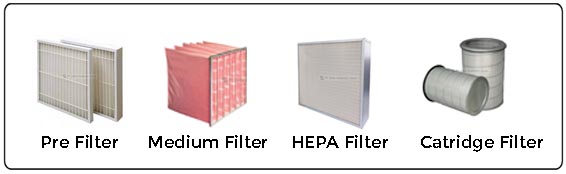
Static air filters operate without an automatic cleaning mechanism.
During wildfire smoke exposure, increased particle accumulation can accelerate pressure drop development and affect filter service life.
Several static filter types commonly used in industrial air filtration applications include:
Pre Filters
Pre Filters provide an initial filtration stage that captures relatively large contaminants, including coarse dust, sand, insects, and other debris.
When dust concentrations rise during forest fires, pre filters may accumulate contaminants more rapidly.
Medium Filters
Medium Filters, including pocket and V-bank configurations, are designed to capture particles at specified filtration efficiency levels.
Exposure to increased fine particulate concentrations can lead to higher dust loading and changes in airflow resistance during operation.
HEPA Filters
HEPA Filters are high-efficiency particulate air filters designed to capture airborne particles.
In applications equipped with HEPA filtration, increased particulate concentrations can create additional filtration loads.
The actual impact depends on filter media specifications, system configuration, and contaminant characteristics.
Static Cartridge Filters
Static cartridge filters retain airborne particles without an automatic pulse-cleaning mechanism.
When ash and dust concentrations increase, particle accumulation can affect pressure drop and reduce the effective service life of the filter elements.
2. Pulse Jet Air Filters
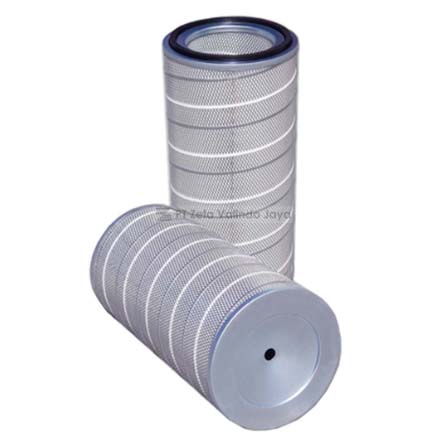
Pulse jet filters use bursts of compressed air, commonly referred to as reverse pulse cleaning, to remove accumulated dust from filter surfaces.
In environments with high particulate concentrations, pulse-cleaning systems help control dust accumulation on the filtration media.
However, very fine, sticky, or moisture-affected particles may exhibit different adhesion characteristics, potentially making them more difficult to remove.
Consequently, the effectiveness of pulse jet filtration during wildfire events depends on contaminant properties, environmental conditions, and filtration system design.
Long-Term Effects on Industrial Operations
Prolonged exposure to wildfire smoke can create several operational challenges for facilities using gas turbines.
1. Shorter Filter Service Intervals
Higher airborne dust concentrations can cause filter elements to reach their pressure drop limits faster than under normal operating conditions.
2. Reduced Energy Efficiency
Increased air intake resistance and compressor fouling can affect gas turbine efficiency, potentially resulting in higher fuel consumption per unit of energy generated.
3. Increased Risk of Operational Disruptions
If the filtration system cannot maintain the required air intake conditions, equipment reliability and operational stability may be affected.
4. Potential Increase in Operating Costs
Changes in filter service life, reduced machine performance, and additional operational interventions can contribute to higher operating costs.
The severity of these effects varies depending on wildfire smoke exposure duration, contaminant concentration, filter technology, and gas turbine characteristics.
The Importance of Air Intake Filtration During Wildfire Smoke Events
Forest fires demonstrate how environmental conditions can directly influence the operating demands placed on industrial air filtration systems.
Air intake filters serve as a primary barrier against airborne particles entering gas turbine compressors.
Properly specified filtration systems help reduce exposure to dust, ash, soot, and other contaminants that may compromise equipment performance.
When air quality deteriorates, particle filtration efficiency, dust-holding capacity, and pressure drop characteristics become especially important factors affecting air intake system performance.
Gas Turbine Air Intake Filter Solutions from ZEFA
PT Zefa Valindo Jaya (ZEFA) supplies various gas turbine air intake filters and industrial air filtration solutions for different operating requirements.
Filter specifications can be tailored to installation requirements, including dimensions, filtration efficiency, airflow capacity, and pressure drop characteristics.
As industrial facilities face the potential impact of wildfire smoke and elevated airborne particulate concentrations, appropriate air filtration systems play an important role in protecting equipment components and supporting reliable gas turbine operations.
Looking for gas turbine air intake filters for your industrial facility or power plant?
Contact PT Zefa Valindo Jaya (ZEFA) for product information, technical consultation, and quotations based on your gas turbine filtration requirements.