

Causes and Solutions for Foul-Smelling and Pungent Wastewater Treatment Plants (
Does Your Wastewater Treatment Plant Smell Bad and Strong? Don’t Blame the Bacteria Just Yet! Learn the Causes and How to Solve Them.
PT Zefa Valindo Jaya provides free wastewater treatment consultation and free site surveys for the JABODEBEK area. Discuss your wastewater treatment plant conditions with our team. Call 021 8873 531 or chat with us via WhatsApp in the bottom-left corner.
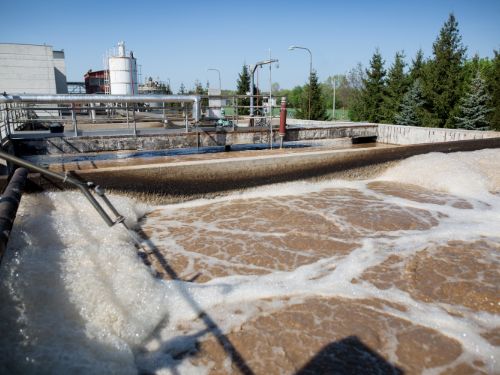
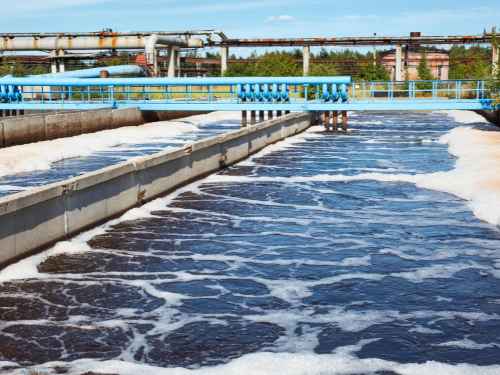
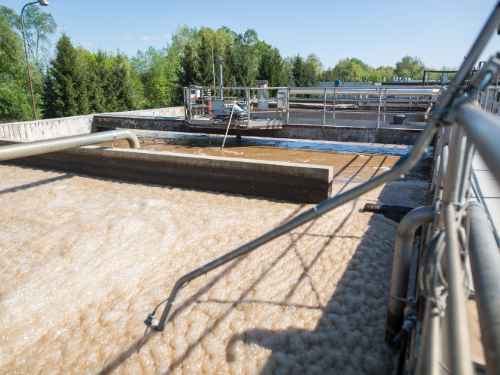
Wastewater Treatment Plant Odor Is Not Just a Bacteria Problem
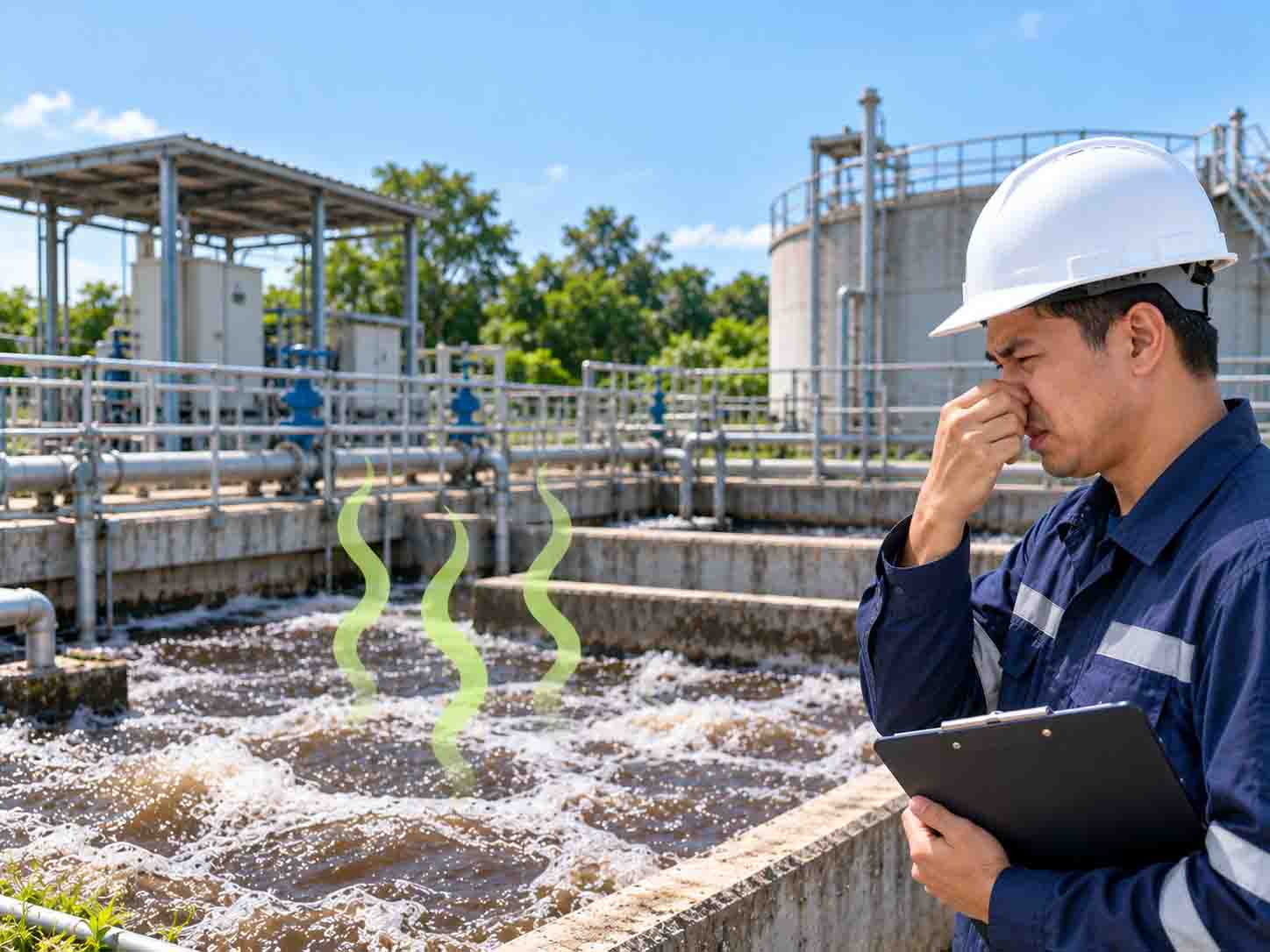
Bad odors from wastewater treatment plants (WWTPs) are often immediately attributed to “problematic bacteria.” However, odors are usually a sign that there is an underlying process condition that needs to be investigated.
In wastewater treatment systems, odors can come from several compounds, particularly hydrogen sulfide or H?S, ammonia, reduced sulfur compounds, and volatile organic compounds (VOCs). H?S is known for its rotten-egg smell and can form when wastewater becomes anaerobic or oxygen-deficient.
Therefore, the issue is not simply about killing or adding bacteria. A more important question is: Why does the WWTP allow these odor-causing compounds to form and be released into the air?
This problem can occur in various types of wastewater treatment facilities, including industrial WWTPs, restaurant WWTPs, hospital WWTPs, commercial buildings, and others.
Odor problems can be addressed once the underlying causes are identified through a comprehensive assessment of flow rate, pollutant load, aeration, sludge, pH, and equipment conditions.
Common Causes of Strong and Unpleasant WWTP Odors
1. Insufficient Oxygen Supply
Blowers, diffusers, or aeration systems that are not operating properly can result in low dissolved oxygen (DO) levels. This condition can promote an anaerobic environment and trigger H?S (hydrogen sulfide) formation.
Check the blower capacity, diffuser condition, air distribution, and whether aeration reaches all areas of the tank. Do not simply check whether the blower is running. Make sure that dissolved oxygen levels and mixing within the tank are actually adequate for the treatment process.
2. Wastewater Is Retained for Too Long
Excessively long retention times, poor flow, dead zones, or tanks that are rarely cleaned can cause wastewater to become septic. Accumulated sediment and sludge can also create oxygen-deficient zones.
Inspection should not be limited to the aeration tank. Equalization tanks, inlet channels, grease traps, sludge holding tanks, and transfer points should also be inspected.
3. Accumulation of Sludge, Grease, or Solids
Excessive sludge accumulation can reduce the effective tank volume and interfere with the biological treatment process. In wastewater containing oil and grease, a full or poorly maintained grease trap can worsen odors and restrict flow.
Proper housekeeping, solids removal, sludge blanket management, and regular cleaning schedules are important parts of odor control.
4. Changes in pH, Temperature, and Wastewater Characteristics
The formation and release of H?S (hydrogen sulfide) are influenced by pH, temperature, sulfate levels, organic loading, dissolved oxygen, and retention time.
Changes in production materials, operating hours, flow rates, or organic loads can cause a previously stable system to start producing odors.
5. The Odor May Come from Another Point
The odor source may be located at the inlet, equalization tank, screening area, grease trap, sludge tank, enclosed channels, vents, or other treatment units.
If the source is incorrectly identified, adding odor-control chemicals may only provide a temporary effect.
How to Solve Odor Problems in a WWTP
Start with diagnosis, not by immediately adding chemicals.
The first step is to identify:
-
Where is the odor strongest?
-
When does the odor start to appear?
-
Does the odor occur during certain hours or processes?
-
What are the conditions of the blowers and diffusers?
-
When were the sludge and grease traps last cleaned?
-
Has there been any change in wastewater flow or pollutant load?
Once the odor source has been identified, corrective actions should target the underlying cause. These may include:
1. Inspect and Adjust the Aeration System
Insufficient aeration can create anaerobic conditions and trigger the formation of hydrogen sulfide or H?S. Inspection should not be limited to checking whether the blower is operating. Check the blower capacity, diffuser condition, air distribution, and dissolved oxygen (DO) levels in the tank.
If only certain areas receive sufficient air, dead zones may form—areas with insufficient mixing and oxygen supply. This condition can be addressed by adjusting airflow, repairing diffusers, or optimizing the aeration system.
2. Manage Sludge, Grease, and Solids
Accumulated sludge can reduce the effective tank volume and become a source of odor. Check the sludge blanket, desludging schedule, sludge holding tank, and sludge pump performance.
For restaurant and food-processing wastewater treatment plants, grease traps should also be cleaned regularly. Check screens, inlet tanks, inlet channels, and equalization tanks to prevent the accumulation of solids or grease that may restrict flow.
3. Check Flow, Retention Time, and Wastewater Load
Wastewater that remains in the system for too long can become septic. Check for possible dead zones, sediment accumulation, blocked channels, and uneven flow.
Compare conditions when odors occur with wastewater flow rates, production hours, organic loading, and changes in raw materials or chemicals. These changes can disrupt a system that was previously operating normally.
4. Check pH, Temperature, and Emission Points
Changes in pH and temperature can affect biological processes as well as the formation of odor-causing compounds. Parameters such as pH, temperature, DO, ORP, sulfide, and H?S can help support the evaluation.
If the odor originates from a specific point, such as an inlet, equalization tank, sludge tank, or vent, improve ventilation or control the emission point. The selection of a scrubber, biofilter, or other odor-control method should be based on the type of pollutant and the conditions of the system.
5. Conduct a Follow-Up Assessment
After corrective actions have been implemented, compare conditions before and after the intervention. Recheck H?S or sulfide, DO, ORP, pH, temperature, sludge conditions, and odor complaints around the WWTP area.
CONCLUSION
A wastewater treatment plant with a strong and unpleasant odor does not automatically mean that the bacteria are the problem.
Odor can be a signal of:
-
Insufficient oxygen.
-
Septic conditions.
-
Accumulation of sludge or grease.
-
Changes in pH and temperature.
-
Changes in wastewater loading.
-
An unidentified emission source.
Do not focus only on eliminating the odor. Identify the underlying cause of the problem.
PT Zefa Valindo Jaya provides free wastewater treatment consultation and free site surveys for the JABODEBEK area. Discuss your WWTP conditions with our team so that the selected solution can be tailored to the actual conditions in the field. Call 021 8873 531 or chat with us via WhatsApp in the bottom-left corner.