Effective Ways to Control Foam in Wastewater Treatment Plants (WWTP)
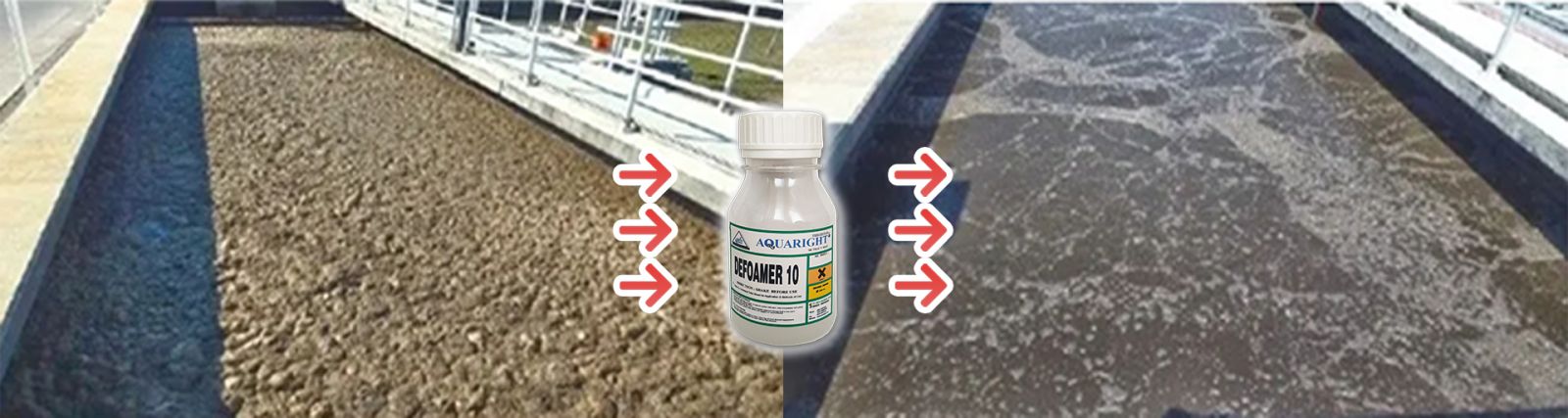 Have you ever seen foam in wastewater treatment? Although it may look trivial, excessive foam in a Wastewater Treatment Plant (WWTP) can be a serious problem. According to studies, “foam formation in wastewater treatment is typically caused by surfactants, biological activity, or mechanical agitation” (Collivignarelli et al., 2020). This means that foam may appear due to detergents, microbial activity, or mechanical mixing in the system.
If left untreated, foam can make the treatment process less effective. Let’s discuss the impacts and practical solutions to overcome this issue.
Why Foam Can Be a Problem in WWTP?
In water treatment, foam is not just a visual disturbance. Some of the impacts include:
-
Disrupting aeration → prevents air from entering water, reducing oxygen transfer.
-
Causing overflow → foam spills over tanks, contaminating the working area.
-
Lowering water quality → treated water may not meet standards.
-
Increasing operational costs → frequent cleaning and maintenance of equipment waste time and resources.
According to Collivignarelli et al. (2020), foam in WWTPs is often triggered by surfactants and extracellular polymeric substances (EPS). If uncontrolled, this reduces oxygen transfer and increases maintenance costs.
Common Ways to Control Foam
Several approaches can help reduce foam in WWTP, such as:
-
Control organic load → ensure raw water does not contain excessive organic matter.
-
Optimize aeration → balance the airflow.
-
Use a defoamer (anti-foam agent) → the most practical solution, quickly breaking down foam.
Practical Solution: Aquaright Defoamer 10
If you’re looking for an effective anti-foam solution in WWTP, Aquaright Defoamer 10 is a reliable choice. This product is specially formulated to control foam effectively with advantages such as:
-
Works optimally even at low dosage.
-
Stable at high temperatures (above 30°C).
-
Long-lasting effect, making it cost-efficient.
-
Easy to apply in various stages of WTP, such as aeration tank, equalization tank, and clarifier.
With Aquaright Defoamer 10, water treatment processes in WWTP become smoother, more efficient, and free from foam disturbances.
Want to know more about how Aquaright Defoamer 10 works in your WWTP? Don’t hesitate to contact our team.
Reference:
Collivignarelli, M. C., Baldi, M., Abbà, A., Caccamo, F. M., Carnevale Miino, M., Rada, E. C., & Torretta, V. (2020). Foams in Wastewater Treatment Plants: From Causes to Control Methods. Applied Sciences, 10(8), 2716.