

Foaming in the Organic Wastewater Treatment Process
Foaming in Organic Wastewater Treatment: Causes and Solutions Using Silicon Based Defoamer
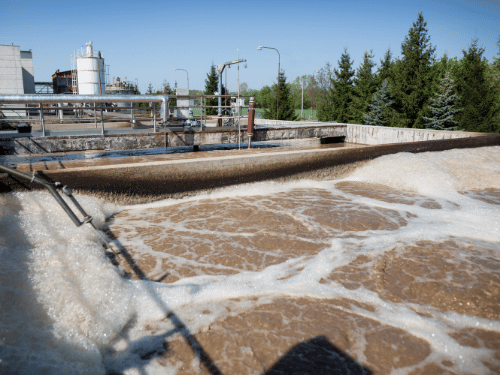
Excessive foam in an aeration tank is more than just a visual issue. If left uncontrolled, foam can overflow from the tank, interfere with aeration and instrumentation, carry solids out of the treatment unit, and create unsafe working conditions.
In organic wastewater treatment systems, foaming can also indicate that the biological process is being disrupted. Therefore, foam control should not only focus on removing visible foam but also on identifying and addressing its underlying causes.
What Is Foaming?
Foaming is the formation of a collection of gas bubbles that become trapped and persist on the surface of a liquid. These bubbles can originate from aeration, turbulence, pumping, influent flow, or biological activity.
Foam becomes more stable when substances such as fats, oils, proteins, surfactants, and certain organic compounds coat the surface of the bubbles. As a result, the bubbles do not break easily and continue to accumulate.
Causes of Foaming in Organic Wastewater Treatment
Common causes of foaming in organic wastewater treatment include:
-
High concentrations of fats, oils, and proteins from food and beverage industries, dairy processing, meat processing, slaughterhouses, and other organic processes.
-
Trapped and accumulated gas bubbles caused by aeration, mixing, turbulence, or biological activity.
-
Excessive growth of filamentous bacteria in activated sludge systems. This condition can cause biological foaming, particularly when the biological process is imbalanced.
-
Synthetic surfactants carried over from cleaning processes, detergents, textile operations, or other manufacturing processes. Surfactants can make bubbles form more easily and become more difficult to break.
Impact of Excessive Foam on Organic Wastewater Treatment
Uncontrolled foaming can lead to:
-
Reduced oxygen transfer efficiency, making it more difficult for oxygen from the aerator to dissolve into the water.
-
Disruption of biological and aeration processes.
-
Sensors and instruments becoming difficult to operate properly.
-
Foam overflowing into the working area.
-
Solids or biomass being carried out of the tank.
-
Increased cleaning and maintenance requirements.
-
Reduced process efficiency and increased risk of downtime.
If the foam is brown, very thick, or continues to form even after cleaning, the biological process should be investigated. The use of antifoam can help reduce foam, but it does not always address the underlying cause.
Foam Control Solutions for Organic Wastewater Treatment
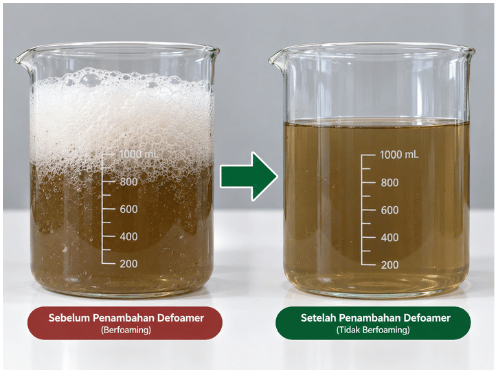
Foam control should begin by identifying the source of the foam, such as changes in wastewater loading, the presence of oil and grease, the use of cleaning agents, aeration conditions, and sludge characteristics.
For foam that has already formed or has the potential to interfere with operations, a silicone-based defoamer can be used to help break down existing foam and reduce further foam formation. The injection point and dosage should be adjusted according to the operating conditions of the system. Excessive use should be avoided, as it may affect the treatment process and effluent quality.
Silicone-Based Defoamer
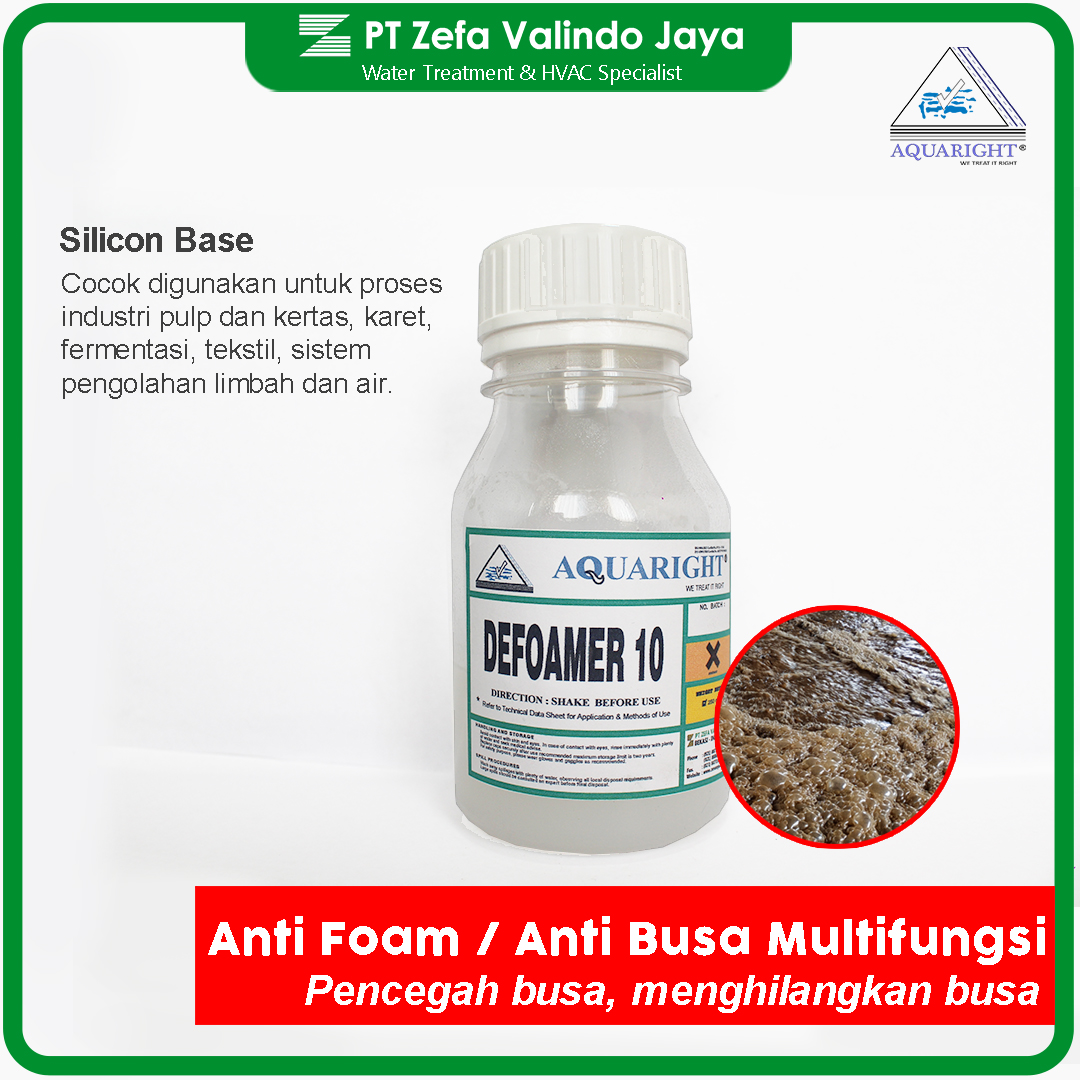
PT Zefa Valindo Jaya provides a highly stable silicone-based defoamer formulation to help control excessive foam in fluid systems.
This defoamer can be used across various industries and applications, including: Paper industry, rubber industry, textile industry, wastewater treatment, water treatment systems.
Advantages of Silicone-Based Defoamer
-
Effective antifoam performance at low dosage.
-
Claimed to provide improved performance at temperatures above 30°C.
-
Effective for long-term use.
-
Easy to handle
Before routine application, the product should be tested under actual operating conditions to determine the most appropriate dosage and injection point. Testing can be carried out by observing the foam collapse rate, process stability, and its effect on effluent quality.
Silicone-based defoamer can be one of the solutions for controlling excessive foam. However, the root cause should still be investigated, and the appropriate product dosage should be determined through testing under actual operating conditions.
A stable wastewater treatment process starts with proper foam control.


