Functions and How to UseOil Spill Dispersant for Oil Spill Control
Oil spills in the sea or industrial waterways represent one of the most hazardous forms of environmental pollution. Beyond damaging marine ecosystems, oil spills also disrupt shipping activities, fisheries, port operations, and maritime industries. One effective solution and response method is the use of chemical Oil Spill Dispersants (OSD).
Oil Spill Dispersant (OSD) is a chemical agent designed to address oil spills in bodies of water such as seas and rivers. OSD works by breaking the oil slick into tiny droplets, making it easier for natural microorganisms to degrade the oil and helping to keep oil concentrations below harmful pollution thresholds.
AQUARIGHT OSD 070 is a solvent-based oil dispersant (hydrocarbon solvent base) containing solvents and surface-active agents (surfactants). This chemical is used to remove and clean up oil spills, including crude oil, white spirit, kerosene, gas oil, and residual oil spilled in ports, sea waterways, or offshore drilling platforms.
The product works by converting hydrocarbons into fine emulsions with very small particle sizes, facilitating natural degradation by marine bacteria through processes between the atmosphere and the marine environment. AQUARIGHT OSD 070 is environmentally friendly as it meets biodegradability standards for surface-active agents.
Compared to water-based dispersants, hydrocarbon solvent-based dispersants like OSD 070 are more effective for high-viscosity or heavy oils such as heavy crude and waxy residues, while water-based types are generally limited to light to medium oils.
Before applying AQUARIGHT OSD 070, follow these preparation steps for optimal results:
- Surround the spill area with an oil boom first to prevent the oil from spreading further. An oil boom is a floating containment barrier that acts as a temporary fence or enclosure, confining the oil to avoid expansion into sensitive areas (e.g., shorelines, ecosystems, or navigation routes).
- If the oil layer is thick enough, use oil absorbent powder to soak up some of the oil or perform skimming (mechanical collection) before spraying the dispersant.
Application on Oil Spills at the Water Surface
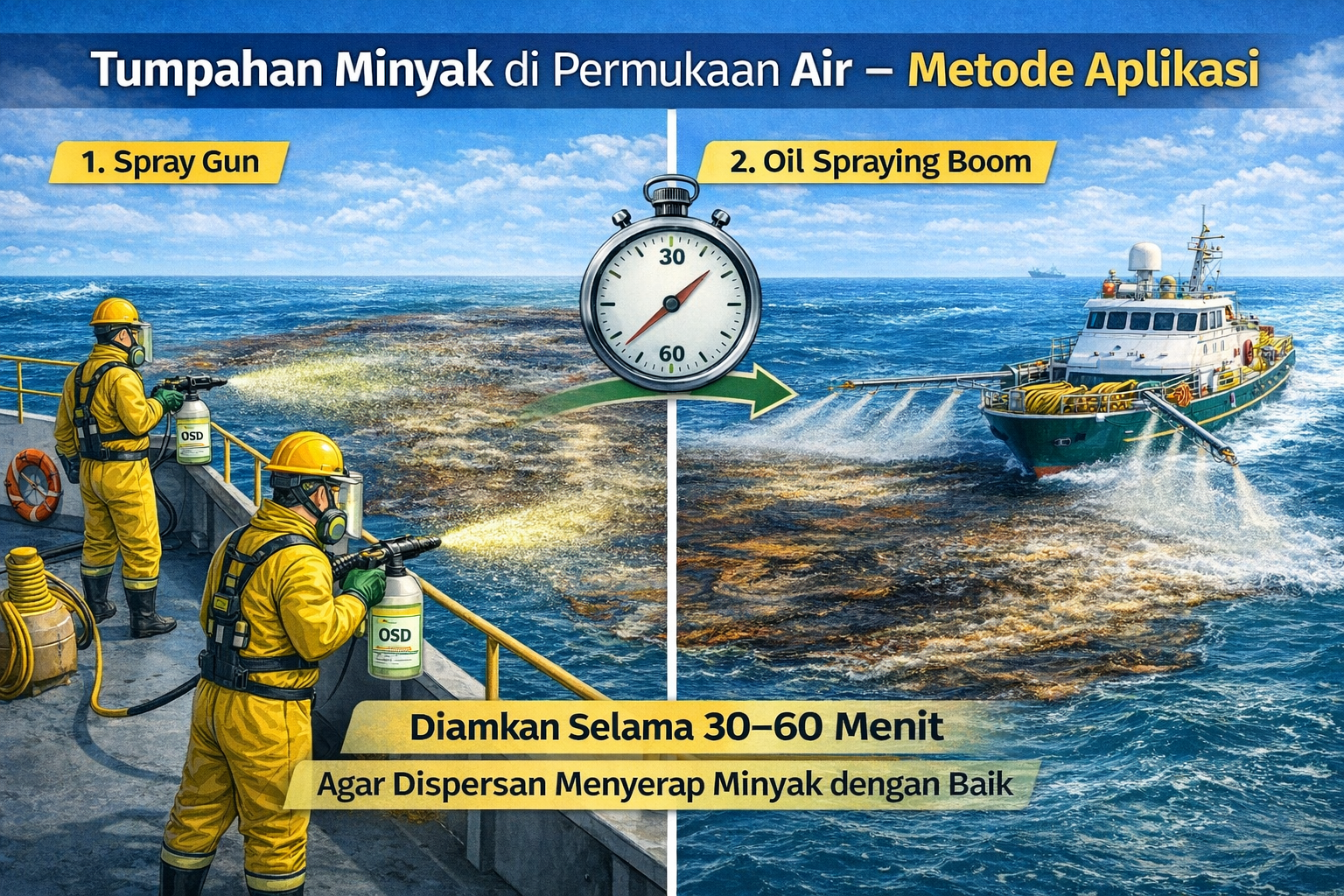
- Spray OSD 070 evenly across the entire spill area using a hand spray gun or an oil spraying boom mounted on a pollution control vessel.
- Ensure the product is evenly distributed before waves from the vessel's engine cover the oil with water.
- Allow it to sit for 30–60 minutes so the oil can fully absorb the dispersant, then agitate the oil-dispersant mixture to accelerate the dispersion process.
Application on Oil Spills on Dock Walls or Hard Surfaces
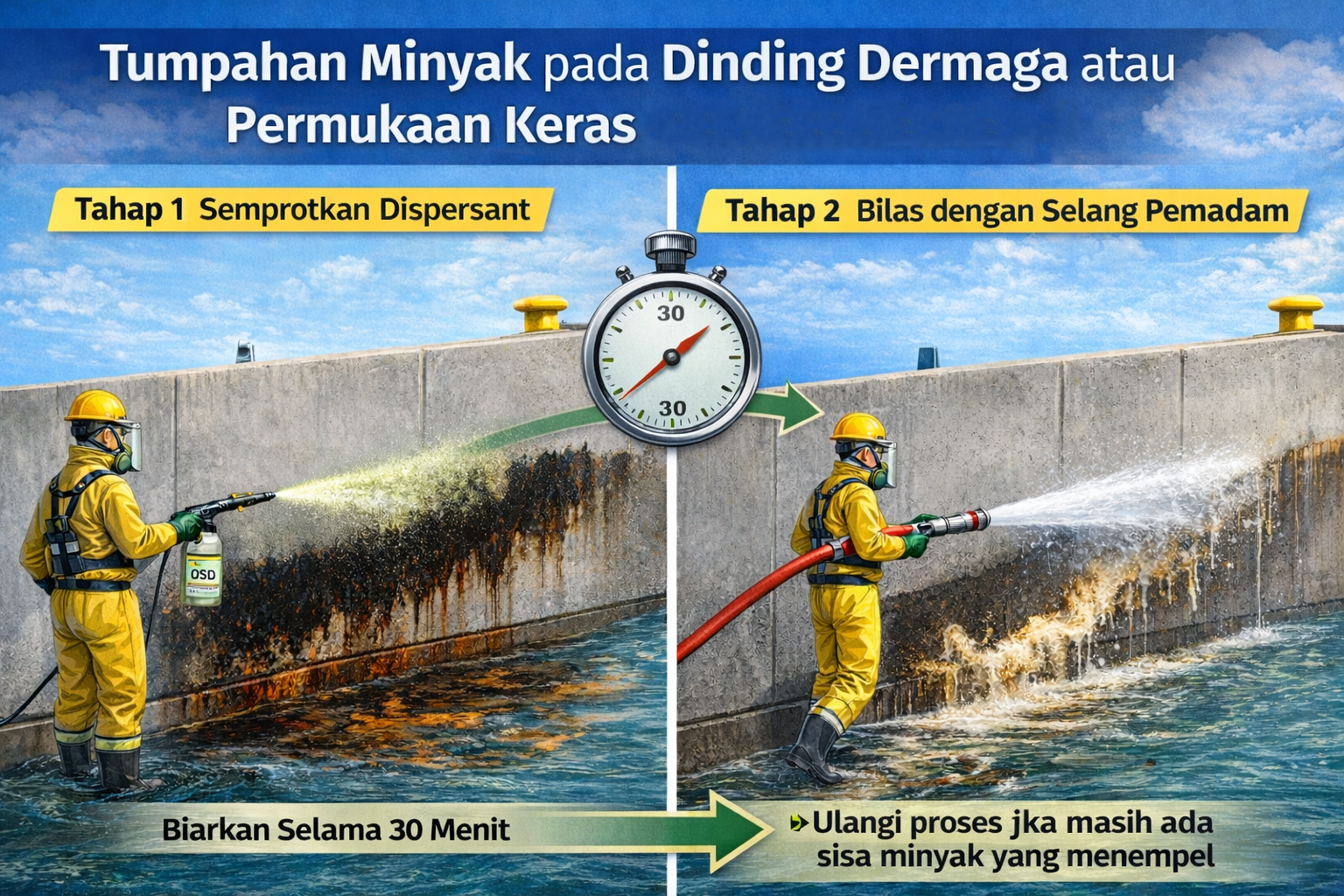
- Spray OSD 070 directly onto the contaminated area.
- Let it sit for 30 minutes, then rinse thoroughly using a fire hose with strong pressure.
- Repeat the process if any oil residue remains.
Application for Cleaning Double Bottom and Deep Tanks (Free Cleaning Method)
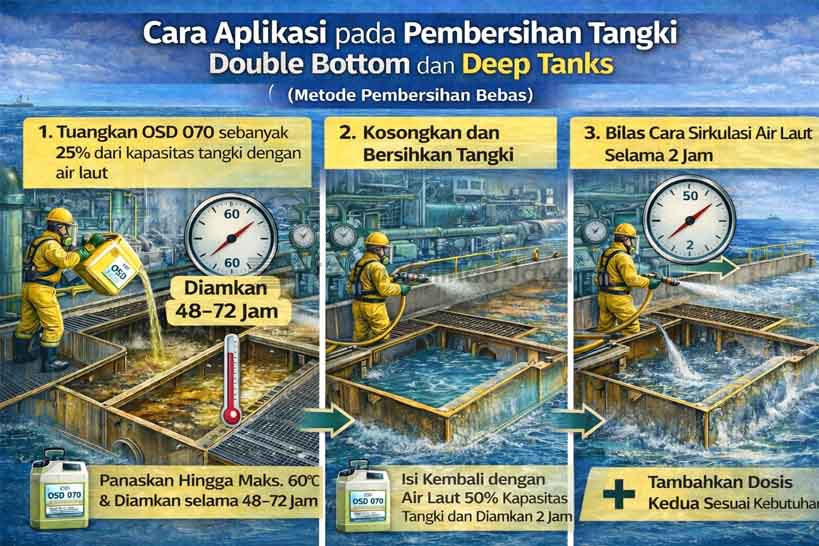
- Continuously rinse the tank with seawater until clean. Ensure all drain valves to and from the tank are closed.
- Pour the first dose of OSD 070 at 25% of the tank's seawater capacity, heat to a maximum of 60°C, and let it stand for 48–72 hours.
- Empty and clean the tank, then refill with seawater to 50% of the tank capacity and allow it to stand for 2 hours for further cleaning.
- Empty again and rinse continuously with seawater for 2 hours.
- Add a second dose of OSD 070 as needed.
- To remove residual gas, fill the tank with seawater until it overflows through the vent pipe, then empty and clean it.
Application for Cleaning Cargo Tanks Using Tank Cleaning Machine
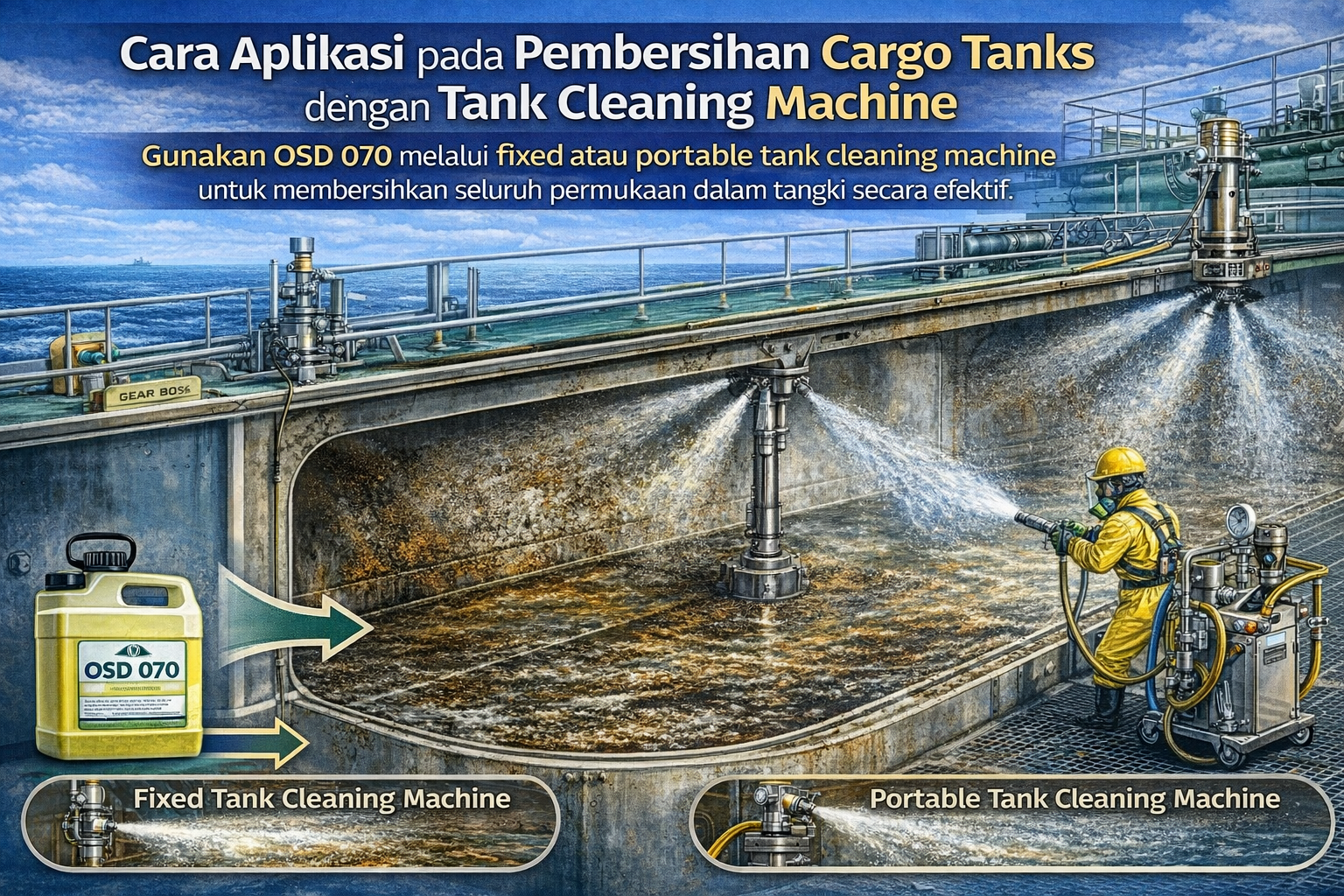
- Use OSD 070 through fixed or portable tank cleaning machines to effectively clean all internal tank surfaces.
Recommended dosages depend on the type of hydrocarbon being treated:
- General tank cleaning → Concentration of 3% – 10%.
- Light hydrocarbons (light hydrocarbons, kerosene, white spirit, light crude oil) → 50–100 liters of OSD 070 per 1000 liters of oil.
- Intermediate crude oil → 150 liters of OSD 070 per 1000 liters of oil.
- Heavy hydrocarbons (residual fuels, oxidized crude oil, heavy hydrocarbons) → 200 liters of OSD 070 per 1000 liters of oil.
- The effectiveness of OSD 070 is influenced by oil type, water temperature, wave conditions, and oil layer thickness.
- Perform a small-scale test in a controlled area first to determine the most appropriate dosage based on actual conditions (oil type, temperature, and water agitation).
- Apply as soon as possible after the spill (ideally within the first 24 hours) before the oil undergoes weathering, which can reduce dispersant efficiency.
- Use spraying equipment that produces medium-sized droplets (approximately 400–700 microns) for optimal penetration into the oil layer.
- Always refer to the latest Technical Data Sheet (TDS) and Safety Data Sheet (SDS) for complete information, and comply with local environmental and occupational safety regulations.
Oil spill dispersants provide an effective solution for managing oil spills, especially in the early stages of an incident. With proper application and adherence to procedures, dispersants can help minimize environmental impact and accelerate water body recovery.
For more technical information on Oil Spill Dispersant products suited to your industry's needs, please contact our team.